

Welcome to Virtual Yarrow Stalks!
Here you can download The Virtual Yarrow Stalks I Ching, read about how to consult the I Ching, browse some books on the subject, and compare 44 different translations.
The Virtual Yarrow Stalks I Ching — online light version, 197 KB; updated 10/12/2023.
New as of 10/8/2023: the site’s dynamic hexagram images have all been converted to scalable vector graphics for improved quality.
The Virtual Yarrow Stalks I Ching offers six methods of consulting: traditional yarrow stalks, coin odds, one moving line, two hexagrams, playing cards, and fractal images. Four translations are included: Wilhelm/Baynes, Nigel Richmond, Gregory C. Richter, and the Takashima Ekidan.
Besides consulting the I Ching, you may look up the results of previous consultations by entering either line numbers, such as 888697; or hexagram and moving line references, such as 20:4,5 or 20-35. The advanced results include the Chu Hsi and Nanjing rules of oracle selection, basic line relationships, nuclear trigrams, steps of change, transitional hexagrams, fan yao, patterns of change, anti-hexagram, King Wen counterpart, correctness hexagram, balance hexagram, shadow site, reversed trigrams, core trigrams, alternating trigrams, and ascending hexagrams. The inverted and reversed “foursome” of hexagrams with their corresponding lines, mutating hexagrams, evolutionary hexagrams, and all possible single-line hexagram transitions may be displayed as well.
I have no intention of trying to explain the I Ching. Is it the oldest book in the world? The first binary number system? A 4096-sided die whose faces all display vague Rorschach-like sayings that stimulate the imagination and provide a medium for expressing the unconscious? An oracle that connects us to a less-understood reality? You decide.
Most automated I Ching programs and scripts operate via computer-generated random numbers. But the yarrow stalk method, in addition to an element of randomness, involves a volitional act on the part of the user, in the division of the stalks into two groups. The Virtual Yarrow Stalks I Ching seeks to duplicate this by having the user click on a group of virtual yarrow stalks of varying widths. Done without conscious effort, this is much closer to using real yarrow stalks than is instructing the computer to generate numbers. More about computer-assisted divination . . . .
Newest pages:
A Command Line I Ching, a Bash script that allows you to use the I Ching from the command line.
Another Fractal I Ching; this one generates hexagrams using the color data from fractal images of the Zaslavsky web map.
Consulting the Shen Shu, a minor divination system with unclear origins that has fairly recently made its way from China to the west.
You might also want to check out Bibliomancy scripts and The Tarot of Ideals.
|
|
A few good books . . . |
A new translation:
|
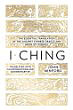
I Ching: The Essential Translation of the Ancient Chinese Oracle and Book of Wisdom
by John Minford. The product of a vast amount of scholarship concerning the I Ching and classical Chinese literature in general. A major focus of the work is the contrast between the ancient bronze age oracle, which ironically we have learned about mostly during the last hundred years; and the book of wisdom which grew by accretion over two millenia, and which many people today are the most familiar with. An example of the difference is the word heng or xiang, which is usually rendered as “success” or “fortune” in familiar-sounding translations. In the bronze age it meant “sacrifice,” probably literal, and possibly human.
However the Hexagrams and their related texts themselves may have evolved, at this early stage in its history the words of the Oracle were linked to no system of ideas, to no Confucian or Taoist philosophy or Yin-Yang cosmology. In other words, the early oracular Change of Zhou was not yet a Book of Wisdom. It provided its readers (the kings and aristocrats who consulted it) with glimpses (often puzzling ones) of the workings of the Universe and man’s part in it, glimpses descended from the ancient shamanistic dialogue with the unknown.
The work is thus presented as two separate translations: the book of wisdom, and the bronze age oracle. Each is accompanied by generous references to previous works, commentaries, other ancient sources such as the Book of Songs, and the latest archaeologic and linguistic discoveries.
|
The following three books will also revolutionize your understanding of the I Ching with long-lost information that has been unearthed since Wilhelm made his great translation.
|
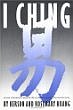
I Ching
by Kerson and Rosemary Huang. This is the book that turned me on to the Zhou Yi, the original I Ching oracle text before it lost most of its historical references and became encrusted with centuries of Confucian commentary.
The translation can be a little “idiosyncratic,” but the introduction is one of the best there is, including
fascinating research into the Yi’s Shang Dynasty roots.
As early as the Song Dynasty (twelfth century A.D.), scholars noticed that there were undecipherable “strange characters” on Shang and Zhou bronzes. Similar “strange” inscriptions have been found on oracle bones unearthed in modern times and on earthenware recovered from ancient tombs. There had been various interpretations of these markings, including the suggestion that they were characters from a tribe foreign to either Shang or Zhou.
Everything fell into place when, in 1978, Zhang Zhenlang proposed at a conference in Changchun, China, that these characters are in fact numerals representing divination lines, like the 6, 7, 8, 9 of the yarrow oracle.
|
|
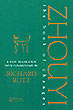
Zhouyi: A New Translation with Commentary of the Book of Changes
by Richard Rutt. An incomparable wealth of information about the latest research
into the earliest form of the Zhou Yi.
Once you’ve picked it up, it’s hard to put down. Were the hexagrams originally
pentagrams? How was the oracle actually selected in the 5th century BC? Contains all ten wings.
’. . . the Book of Changes is to be explained in the light of its own content and of the era to which it belongs . . .’
When Richard Wilhelm wrote these words in 1923, he believed they described what he had done in his great
German translation. Yet within ten years archaeology and philology had shed new light on ancient China, revealing
that what Wilhelm had produced was a Book of Changes smothered by philosophical theories that were unknown in the
era to which it belongs. Three-quarters of a century later, Chinese sinologists have shown that the book is really a
Bronze Age diviner’s manual dealing with war and human sacrifice, giving advice to rulers at the dawn of literature.
|
|
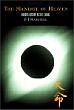
The Mandate of Heaven
by S. J. Marshall. What was the real origin of what we now know as the I Ching? After three millenia, its original text has been obscured by linguistic change and generations of commentary. But according to Marshall:
Traces remain, however, of these original oracles; dating clues, hidden names, and ancient places are still in the book, some having eluded discovery for the past 3,000 years.
The most important clue is found in hexagram 55, “the polestars can be seen at noon.” When does this happen? During a total solar eclipse, one of which occurred on June 20, 1070 B.C., and may have marked the fall of the Shang dynasty and the transfer of the mandate of heaven to the Zhou. This book is a landmark in itself. It also examines topics such as forgotten proper names in the text, the mingyi bird of hexagram 36, melons, willows, hoarfrost, and creepers.
|
|
|
More books . . . |
|
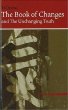
I Ching: The Book of Changes and the Unchanging Truth
by Hua-Ching Ni. A free but well-written translation, introduced by a lot of Symbol and Number School material and folklore. Some of the latter is interesting, such as the relationship between the Big Dipper and the seasons, and diagrams of the 28 constellations of the Chinese zodiac. A major emphasis is rhythms of life and health, such as the effect of stress on the body, meridian systems, natural medicine, and mental illness. Describes using small seeds to determine a hexagram and one moving line. Ends with five brief tales of ancient I Ching practitioners, and some personal notes.
|
| More information (sitemap and links) | 39 |
main page | more books 1 | more books 2 | more information | Virtual Yarrow Stalks
consulting: direct yarrow method | coins | playing cards | dynamic energies | dynamic playing cards
way of 16,777,216 | fractal I Ching | another fractal I Ching | command line I Ching
rules of interpretation | Chu Hsi's rules | Nanjing rules
texts: pocket I Ching | Takashima Ekidan | 44 translations
hexagram relationships: pang tong yao | fan yao | inverted pairs | boolean I Ching
little-endian | flashcards | anti-hexagram | ascending hexagrams
transitions | Gray codes | daisy chains | memory wheels | graphic I Ching
miscellaneous: Ling Qi Jing | Tai Xuan Jing | Shen Shu